Living in Your Murcia Home: Residency Routes That Work in 2026
By Lee Doherty
MedSol Real Estate · Murcia property specialist · 3 August 2026
Updated 22 September 2026
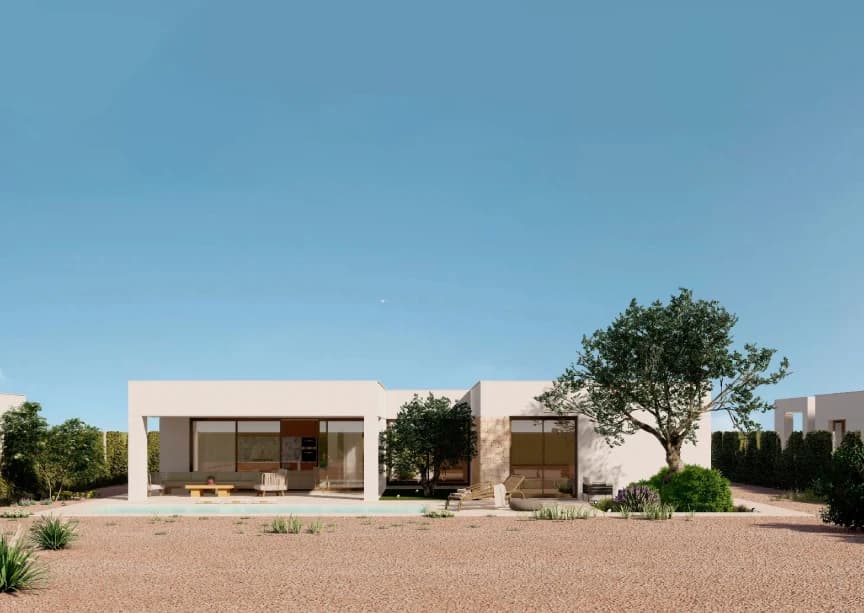
You can live in your Murcia home in 2026 through three well-trodden routes. Retirees and people with passive income use the non-lucrative visa. Remote workers use the digital nomad visa. Holiday-home owners simply use the 90/180 rule, which lets UK visitors spend up to 90 days in any 180 in Spain with no visa at all.
Most of the buyers I meet aren't planning to move here full time straight away. They want a golf-resort home they can use for long winter spells, and maybe a path to living here properly later. Both are very achievable. You just need to pick the route that fits how you want to use the house.
Which residency route is right for me?
The short version first, then each route in turn.
| How you want to use your home | Route that fits | Key requirement |
| Regular holidays and long winter stays | 90/180 rule (no visa) | UK passport; up to 90 days in any 180 |
| Retire here or live on passive income | Non-lucrative visa | Around €28,800 a year, plus about €7,200 per dependant |
| Live here and keep working remotely | Digital nomad visa | €2,849 a month for the main applicant |
| Join a family member already resident | Family reunification | Depends on the family member's status |
One point to be clear on from the start: owning property doesn't by itself give you a right to live in Spain. Residency comes from the visa route, and the home is where you enjoy it. That's why I always suggest a quick conversation with an immigration lawyer early on. We can introduce you to independent, English-speaking lawyers who handle this regularly, and you're always free to choose your own.
How does the 90/180 rule work for holiday-home owners?
For most of our owners, this is all they need. As a UK citizen you can spend up to 90 days in any rolling 180-day period in Spain (and the wider Schengen area) without a visa.
In practice that gives you a lot of time in the sun. A typical pattern is six or seven weeks over the late autumn, home for Christmas, then another long stay in the spring. That lines up nicely with golf high season here. It's too hot to play much in July and August, so October to May is when the courses are busiest, with cooler mornings and sunny days. On the GNK Golf 2026 rate card, La Torre's high season runs February to May and September to November, and El Valle's runs March to May and September to October.
Your entries and exits are now recorded electronically at the border under the EU's Entry/Exit System, so it's simple to keep track of your days. Plenty of owners keep a note on their phone calendar too.
What is the non-lucrative visa and who is it for?
The non-lucrative visa (NLV) is the classic route for retirees and anyone living on pensions, investments or rental income. It lets you live in Spain full time.
The main points:
- Income: around €28,800 a year for the main applicant, set at 400% of IPREM (Spain's reference income figure), plus roughly €7,200 for each dependant. IPREM is updated periodically, so check the current figure when you apply.
- Type of income: it must be passive, such as pensions, investment income or rent. The visa is non-lucrative, meaning you don't work in Spain while you hold it.
- Health cover: full private health insurance with no co-payments.
- Padrón: register on the local padrón (the town hall's register of residents) within 30 days of arriving.
It runs for one year initially, then renews in two-year blocks. Five years gets you long-term residence, and ten years opens the door to Spanish nationality.
Can I work remotely from my Murcia home?
Yes, through the digital nomad visa. It's designed for people employed by, or freelancing for, companies outside Spain, and it's a good fit if your job travels with your laptop.
The income requirement is €2,849 a month for the main applicant, with additional amounts for family members. A home office on a terrace overlooking the course is a very realistic proposition.
What other routes are there?
Two more are worth knowing about:
- Family reunification: if a family member already holds Spanish residency, you may be able to join them.
- Student visa: for anyone enrolling on a recognised course in Spain, including Spanish language programmes.
What happened to the Golden Visa?
Spain's investor visa was repealed by Ley Orgánica 1/2025, with effect from 3 April 2025. There's no replacement investor route. For most of the owners I work with it changes very little, because the routes above were always the more common way to live here.
What else should I plan for if I move over?
A couple of practical points help things go smoothly:
- Tax residence: spending more than 183 days a year in Spain makes you Spanish tax-resident on your worldwide income. Many people plan for this happily, as it goes hand in hand with moving here, and a short conversation with a tax adviser first makes it straightforward.
- Order of steps: it helps to speak to an immigration lawyer about your visa at the same time as you start viewing, so both run in parallel. On the property side, we guide you through each step from reservation to completion and handover.
Once you're resident, the 90/180 limit no longer applies to you. Holders of long-stay visas and residence permits are outside the 90-day rule and the Entry/Exit System checks for visitors.
Which resorts suit each way of living?
Omala Residences, Alhama Nature at Condado de Alhama, Corvera Hills and Santa Rosalia all work for both patterns: a few long stays a year on the 90/180 rule, or year-round living on a residence visa. We know each of them well and can compare them honestly for how you plan to use your home. Corvera Hills has the bonus of Región de Murcia International Airport close by, which makes coming and going easy, and its golf course is due to reopen in Q4 2026. At Condado de Alhama, the owner's €15m plan announced in June 2025 to reopen the course alongside a five-star hotel is being delivered in phases through 2026-27.
FAQ
Can UK citizens live in their Spanish holiday home without a visa?
Yes, for up to 90 days in any rolling 180-day period. That covers most holiday-home owners, and many use it for long autumn and spring stays during golf high season.
How much income do I need for Spain's non-lucrative visa in 2026?
Around €28,800 a year for the main applicant (400% of IPREM), plus roughly €7,200 per dependant. The income must be passive, such as pensions or investments, and you should check the current IPREM figure when you apply.
Does buying a property in Murcia give me residency?
Not on its own. Residency comes from a visa route such as the non-lucrative or digital nomad visa, and your home is where you enjoy it.
Can I work in Spain on a non-lucrative visa?
No. It's designed for people living on passive income. If you work remotely for a company outside Spain, the digital nomad visa is the route that fits.
When do I become a Spanish tax resident?
Generally when you spend more than 183 days a year in Spain. At that point you're taxed in Spain on your worldwide income, so plan it with a tax adviser before you move.
If you'd like to see the resorts for yourself, I'd love to show you round. Message me on WhatsApp on +44 7424 864 684 or send an enquiry and I'll get straight back to you.
This article is general information, not legal or financial advice. Confirm your own position with a qualified Spanish lawyer or tax adviser before you act.
About the author — Lee Doherty is the founder of MedSol Real Estate. He spent two years researching the region before buying here himself, and now helps UK and international buyers find golf-resort homes across the Region of Murcia.
Written by
Lee Doherty
Lee Doherty is the founder of MedSol Real Estate, working on the ground in the Region of Murcia to help UK and international buyers find homes in Murcia.